

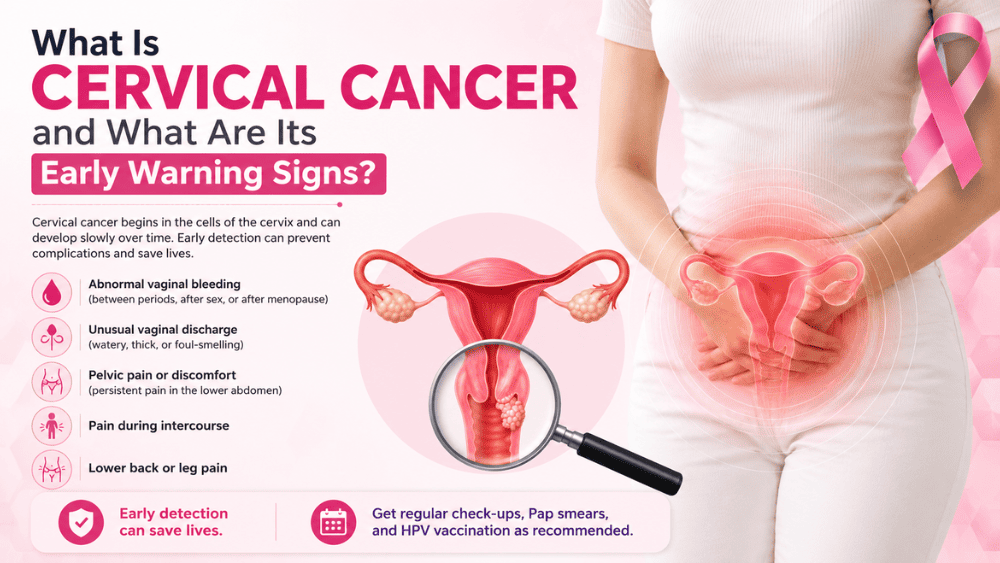
Cervical cancer is a cancer that develops in the cells of the cervix, the lower part of the uterus that connects to the vagina. It is mostly caused by persistent infection with high risk types of the Human Papillomavirus (HPV) and often shows no symptoms in its early stages. Regular screening and timely diagnosis remain the most effective ways to detect it before it advances.
Cervical cancer is one of the most common cancers affecting women worldwide, but it is also one of the most preventable when detected early. Understanding its causes, symptoms, and available treatment options can help women make informed decisions about their health.
What Causes Cervical Cancer?
Almost all cases of cervical cancer are linked to long term infection with high risk strains of HPV, a common virus spread through skin to skin and sexual contact. In most cases, the body’s immune system clears the infection on its own. However, when the infection persists for years, it can cause abnormal changes in cervical cells that may eventually turn cancerous.
Several factors can increase a woman’s risk of developing cervical cancer:
- Persistent HPV infection, especially with high risk strains such as HPV 16 and HPV 18
- Weakened immune system, due to conditions like HIV or long term use of immunosuppressive medication
- Smoking, which reduces the body’s ability to fight HPV infection
- Long term use of oral contraceptives, particularly over five years or more
- Multiple childbirths, which has been associated with a higher risk in some studies
- Early sexual activity or multiple sexual partners, which increases exposure to HPV
- Family history of cervical cancer, indicating a possible genetic factor
- Lack of regular screening, allowing abnormal cell changes to go undetected for years
Early Symptoms of Cervical Cancer
In the earliest stages, cervical cancer often causes no noticeable symptoms at all. This is why routine screening is so important, even for women who feel completely healthy. As the disease progresses, the following symptoms may appear:
- Unusual vaginal bleeding, including bleeding between periods, after sex, or after menopause
- Unusual vaginal discharge that may be watery, bloody, or have a foul odor
- Pelvic pain or discomfort, particularly during intercourse
- Longer or heavier menstrual periods than usual
- Pain during urination in advanced stages
- Unexplained weight loss and fatigue in later stages
Any woman experiencing these symptoms, especially bleeding after menopause or after intercourse, should consult a gynaecologist or oncologist promptly rather than waiting for symptoms to worsen.
Stages of Cervical Cancer
Cervical cancer is classified into four main stages based on how far it has spread:
- Stage 0: Abnormal cells are present only on the surface of the cervix and have not spread deeper. This is often called carcinoma in situ.
- Stage I: Cancer is confined to the cervix and has not spread to nearby tissue.
- Stage II: Cancer has spread beyond the cervix to nearby areas such as the upper vagina, but not to the pelvic wall.
- Stage III: Cancer has spread to the lower vagina or pelvic wall, and may be affecting nearby lymph nodes.
- Stage IV: Cancer has spread to distant organs such as the bladder, rectum, lungs, or bones.
Identifying the exact stage helps doctors decide the most suitable treatment plan for each patient.
How Is Cervical Cancer Diagnosed?
Diagnosis usually begins with a routine gynaecological visit and involves a combination of the following tests:
- Pap smear test, which checks for abnormal or precancerous changes in cervical cells
- HPV DNA test, which detects the presence of high risk HPV strains
- Colposcopy, a procedure where the cervix is examined closely using a magnifying instrument
- Biopsy, where a small tissue sample is taken from the cervix to confirm the presence of cancer cells
- Imaging tests, such as CT scan, MRI, or PET-CT, to check whether the cancer has spread beyond the cervix
Doctors often recommend a biopsy once abnormal cells are identified, since it gives the most accurate confirmation of a diagnosis. If you want to understand this diagnostic process in more detail, our earlier article on understanding biopsy and why it matters for cancer diagnosis explains what patients can expect.
Treatment Options for Cervical Cancer
Treatment depends on the stage of cancer, the patient’s overall health, and whether she wishes to preserve fertility. Common treatment approaches include:
- Surgery, ranging from removal of abnormal tissue in early stages to a full hysterectomy in more advanced cases
- Radiation therapy, used alone or alongside chemotherapy to destroy cancer cells and shrink tumors
- Chemotherapy, often combined with radiation for locally advanced cases
- Targeted therapy, which focuses on specific characteristics of cancer cells
- Immunotherapy, used in select advanced cases to help the immune system fight cancer cells
A coordinated treatment plan involving gynaecologists, surgical oncologists, and radiation specialists gives patients the best chance of successful treatment. Doctors evaluate the type and stage of cancer along with the patient’s overall health before recommending the right combination of therapies.
Can Cervical Cancer Be Prevented?
Yes, cervical cancer is considered one of the most preventable cancers. Preventive steps include:
- HPV vaccination, recommended for girls and young women, ideally before the onset of sexual activity
- Regular Pap smear and HPV screening, generally recommended every three to five years depending on age and risk factors
- Practicing safe sexual habits, including limiting the number of sexual partners
- Avoiding smoking, which weakens the body’s natural defense against HPV
- Prompt treatment of abnormal Pap smear results, before they progress to cancer
Early detection through regular screening remains the single most effective way to prevent cervical cancer from advancing to a serious stage.
When Should You See a Doctor?
Women should not wait for severe symptoms to appear before seeking medical advice. Any unusual vaginal bleeding, discharge, or pelvic pain should be evaluated promptly. Women above the age of 21, or those who are sexually active, are generally advised to begin regular cervical screening as part of their routine health checkups.
If you are looking for expert cancer diagnosis and treatment in Ajmer, Kshetrapal Hospital, one of the leading cancer hospitals in Ajmer, offers complete cancer care under one roof, from screening and diagnosis to surgery, radiation, and follow-up support, helping patients avoid the need to travel outside the city for treatment.
Frequently Asked Questions
Is cervical cancer curable if detected early?
Yes, cervical cancer detected in its early stages has a high success rate with treatment. This is why regular screening is strongly recommended for all women.
At what age should cervical cancer screening begin?
Screening is generally recommended to begin at age 21, or earlier if a woman is sexually active and has specific risk factors.
Does the HPV vaccine fully prevent cervical cancer?
The HPV vaccine significantly reduces the risk by protecting against the most common high risk HPV strains, but regular screening is still recommended even after vaccination.
Can cervical cancer occur without HPV infection?
While the vast majority of cases are linked to HPV, a small number of cases can occur due to other factors, which is why regular screening remains important for all women.
Is cervical cancer hereditary?
Cervical cancer is not typically considered hereditary, though a family history may slightly increase risk. HPV infection remains the primary cause in almost all cases.