

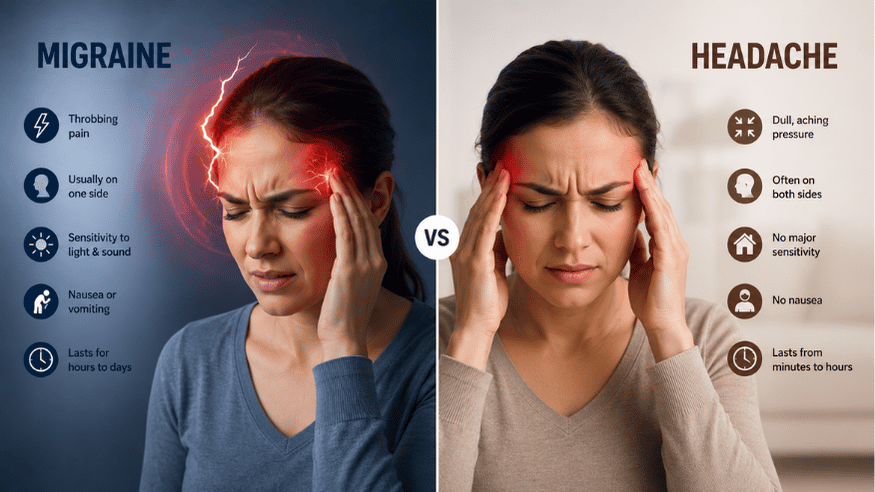
A regular headache usually causes mild to moderate pain on both sides of the head and rarely stops daily activities, while a migraine causes intense, often one-sided throbbing pain that can come with nausea, sensitivity to light and sound, and visual disturbances. Recognizing which one you are experiencing helps guide the right treatment and shows when it is time to consult a neurologist.
Headaches are one of the most common health complaints, and most people experience them from time to time without much concern. Migraines, however, are a distinct neurological condition that can significantly affect daily life. Understanding the difference helps you manage symptoms better and know when professional care is needed.
What Is a Regular Headache?
A regular headache, often called a tension headache, is the most common type of headache people experience. It typically causes a dull, aching sensation and a feeling of tightness or pressure across the forehead or around the head.
Common characteristics of a regular headache include:
- Mild to moderate pain, usually described as a dull ache or pressure
- Pain that affects both sides of the head
- No nausea or vomiting
- Little to no sensitivity to light or sound
- Pain that does not usually worsen with physical activity
- Often triggered by stress, poor posture, eye strain, or dehydration
Most regular headaches improve with rest, hydration, over-the-counter pain relief, and addressing the underlying trigger, such as stress or lack of sleep.
What Is a Migraine?
A migraine is a neurological condition, not just a headache. It involves changes in brain activity that lead to intense pain along with several other symptoms that can significantly disrupt daily activities.
Common characteristics of a migraine include:
- Moderate to severe throbbing or pulsing pain, often on one side of the head
- Nausea or vomiting during an episode
- Sensitivity to light, sound, or even smell
- Pain that worsens with physical activity or movement
- Visual disturbances before the headache begins, known as aura, such as flashing lights or blind spots
- Episodes that can last anywhere from a few hours to several days
Migraines often follow a pattern, with some people experiencing warning signs, called a prodrome, hours or even a day before the actual headache begins.
Key Differences Between Migraine and Headache
Here is a quick side-by-side comparison to help you tell the two apart:
Pain intensity
- Regular headache: Mild to moderate
- Migraine: Moderate to severe
Pain location
- Regular headache: Both sides of the head
- Migraine: Often one side
Nausea or vomiting
- Regular headache: Rare
- Migraine: Common
Light or sound sensitivity
- Regular headache: Rare
- Migraine: Common
Effect of physical activity
- Regular headache: Little to no change
- Migraine: Often worsens the pain
Visual disturbances
- Regular headache: Not present
- Migraine: May occur as an aura before the headache begins
Duration
- Regular headache: A few hours
- Migraine: Several hours to a few days
What Causes Migraines?
The exact cause of migraines is not fully understood, but they are believed to involve changes in brain chemicals and blood vessel activity. Certain factors are known to trigger migraine episodes in people who are prone to them:
- Hormonal changes, particularly in women, often linked to the menstrual cycle
- Stress and anxiety, which are among the most common migraine triggers
- Certain foods and drinks, such as caffeine, alcohol, aged cheese, and processed foods with additives
- Irregular sleep patterns, including both too little and too much sleep
- Sensory triggers, such as bright lights, strong smells, or loud noises
- Weather changes, including shifts in barometric pressure
- Skipping meals or dehydration
Identifying personal triggers through a headache diary can be helpful in managing and reducing the frequency of migraine episodes.
When Should You See a Neurologist?
While occasional headaches are usually not a cause for concern, certain patterns and symptoms warrant a visit to a neurologist:
- Headaches that occur frequently, more than a few times a month
- Pain that is severe enough to interfere with daily activities or work
- A sudden, severe headache unlike any you have experienced before
- Headaches accompanied by vision changes, weakness, numbness, or difficulty speaking
- Headaches that worsen over time or change in pattern
- Migraine symptoms that do not improve with usual pain relief methods
- Headaches following a head injury
A sudden and extremely severe headache, especially with symptoms like confusion, vision loss, or weakness on one side of the body, needs immediate medical attention, since it could indicate a more serious underlying condition.
How Are Migraines Diagnosed and Treated?
Diagnosis usually begins with a detailed discussion of your symptoms, headache pattern, and triggers, along with a neurological examination. In some cases, imaging tests like an MRI or CT scan may be recommended to rule out other causes, especially if the headache pattern is unusual or accompanied by other neurological symptoms.
Treatment approaches for migraines often include:
- Pain relief medication, taken at the onset of an episode to reduce severity
- Preventive medication, prescribed for people with frequent or severe migraines to reduce how often they occur
- Lifestyle changes, including regular sleep schedules, stress management, and trigger avoidance
- Identifying and managing personal triggers through tracking patterns over time
Since migraine triggers and treatment responses vary from person to person, a personalized approach guided by a neurologist often works best for long term management.
Living with Frequent Headaches or Migraines
If headaches or migraines are becoming a regular part of your life, it is worth having them properly evaluated rather than simply managing each episode as it comes. Persistent memory or concentration issues, along with frequent headaches, can sometimes be connected and are worth discussing with a specialist. Similarly, if headaches occur alongside other unusual sensations like numbness, it is important to get a proper neurological evaluation rather than assuming the symptoms are unrelated.
The Department of Neurology at Kshetrapal Hospital in Ajmer provides complete evaluation and personalized treatment plans for headaches and migraines, helping patients understand their triggers and manage symptoms effectively.
Frequently Asked Questions
Can a headache turn into a migraine?
A regular headache and a migraine are different conditions, so a headache does not typically turn into a migraine. However, some people experience both types at different times, which can create confusion about which one they are having.
Are migraines hereditary?
Yes, migraines often run in families, and having a parent with migraines increases the likelihood of experiencing them as well.
Can stress alone cause a migraine?
Yes, stress is one of the most common migraine triggers, though it often works alongside other factors like poor sleep or skipped meals to bring on an episode.
Is it normal to have migraines every week?
No, frequent migraines, especially more than a few times a month, should be evaluated by a neurologist, since preventive treatment options can significantly reduce how often they occur.
Can children get migraines?
Yes, children can experience migraines, though symptoms may look slightly different, such as shorter episodes or more prominent stomach-related symptoms compared to adults.