

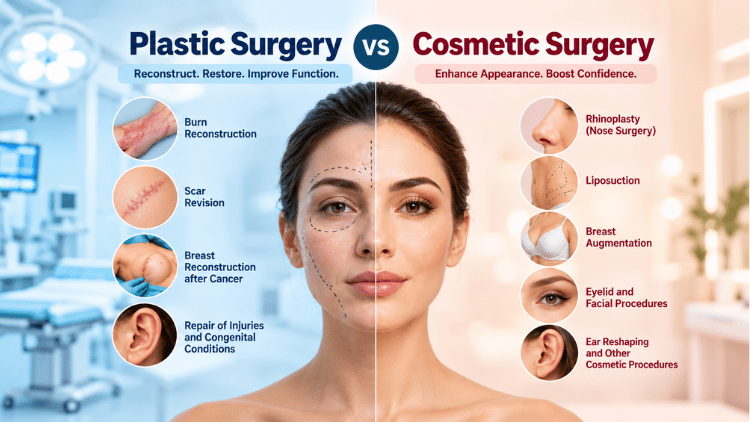
Plastic surgery and cosmetic surgery are often used interchangeably, but they do not mean exactly the same thing. Both can involve changing the appearance of the face or body, yet their goals, reasons for treatment and procedures may differ.
Some people consider surgery to improve the appearance of a particular feature, while others need treatment to repair damage caused by an accident, burn, birth condition or medical illness. Understanding the difference between plastic surgery and cosmetic surgery can help you make an informed decision about your healthcare options.
At Kshetrapal Hospital, Ajmer, the Department of Plastic Reconstructive Surgery provides care for various reconstructive and cosmetic concerns. This guide explains the differences between the two, common procedures, possible risks and important considerations before choosing surgery.
What Is Plastic Surgery?
Plastic surgery is a surgical specialty that focuses on reshaping, repairing or reconstructing parts of the body. It can improve appearance, restore function or address both concerns.
The word “plastic” comes from a term meaning to shape or mould. It does not refer to the use of plastic materials.
Plastic surgery is broadly divided into two categories: reconstructive surgery and cosmetic surgery. Reconstructive surgery focuses on repairing defects or restoring function and appearance after injury, illness or congenital conditions. Cosmetic surgery primarily aims to enhance the appearance of features that are generally functioning normally.
Because both areas use overlapping surgical techniques, a plastic surgeon may perform reconstructive and cosmetic procedures depending on their qualifications, experience and scope of practice.
What Is Reconstructive Surgery?
Reconstructive surgery is generally performed to correct a physical defect, repair damaged tissue or improve function and appearance following a medical condition.
A person may need reconstructive treatment because of a congenital condition, an accident, a burn injury, cancer surgery or a wound that has not healed properly.
1. Burn Reconstruction
Burn injuries can damage the skin and underlying tissues. After the initial injury has healed, some patients develop scars, tight skin or contractures that restrict movement.
Reconstructive procedures may help release tight scar tissue, cover damaged areas or improve function. Treatment depends on the depth of the burn, the location of the injury, the healing process and the extent of scarring.
Not every burn scar requires surgery. Depending on the situation, treatment may involve scar management, rehabilitation or surgical reconstruction.
2. Scar Revision
Some scars become raised, wide, uncomfortable or restrictive. Scar revision may be considered when a scar affects appearance, movement or comfort.
The treatment depends on the type, location and severity of the scar. Options may include non-surgical treatments or surgery to improve its appearance or function.
It is important to understand that scar revision does not guarantee complete scar removal. Surgery creates a new wound, which will also heal into a scar. The aim is to achieve an improvement where possible.
3. Breast Reconstruction After Cancer Surgery
Some patients choose breast reconstruction after a mastectomy or other cancer-related surgery. Depending on the individual’s needs, reconstruction may involve implants, the patient’s own tissue or other surgical techniques.
Reconstruction may be performed at the time of cancer surgery or at a later stage. The timing depends on the cancer treatment plan, overall health, recovery and personal preferences.
Patients may need coordinated care involving relevant cancer treatment services and reconstructive surgery. The most appropriate approach should be discussed with the treating team.
4. Repair of Injuries and Tissue Defects
Accidents can damage skin and soft tissue, sometimes leaving wounds that require specialised closure or reconstruction. Reconstructive surgery may be used to cover exposed tissue, repair defects and improve function after an injury.
Some procedures also address congenital differences, such as selected ear deformities or cleft-related conditions.
The main objective is to achieve the best possible functional and structural result while considering appearance and long-term recovery.
What Is Cosmetic Surgery?
Cosmetic surgery is primarily performed to enhance a person’s appearance. It may involve changing the shape, size, proportions or contours of a feature that is otherwise functioning normally.
These procedures are generally elective, meaning they are chosen rather than required for an urgent medical reason. People consider cosmetic surgery for different reasons, and the decision should be based on realistic expectations, personal preferences and a proper medical assessment.
Common cosmetic procedures include the following.
1. Rhinoplasty
Rhinoplasty, commonly called nose surgery, changes the shape or proportions of the nose. Some procedures are performed for cosmetic reasons, while others may also address structural problems that affect breathing.
The treatment plan depends on the patient’s anatomy, goals and functional needs. A consultation helps determine whether surgery is suitable and what changes may realistically be achieved.
2. Liposuction
Liposuction removes localised deposits of fat from selected areas of the body. It is intended to improve body contours rather than serve as a treatment for obesity or a substitute for healthy lifestyle habits.
The procedure may be considered for areas where fat deposits remain despite general weight management. However, results vary between individuals, and liposuction carries risks that should be discussed before treatment.
3. Breast Augmentation
Breast augmentation changes breast size or shape, commonly using implants. People may consider it to address differences in breast size, changes after pregnancy or personal aesthetic preferences.
The decision requires discussion of the expected appearance, implant-related considerations, possible complications and future monitoring. Patients should understand that implants may require further medical attention or additional surgery in the future.
4. Eyelid and Facial Procedures
Selected eyelid procedures may remove excess skin or alter the appearance of the eyelids. Other facial procedures may address features associated with ageing or individual aesthetic preferences.
The appropriate procedure depends on the patient’s anatomy, medical history and goals. A qualified professional should explain the likely benefits, limitations and risks before treatment.
5. Ear Reshaping and Other Cosmetic Procedures
Otoplasty, also known as ear reshaping surgery, can change the position or shape of prominent ears. Other cosmetic procedures may focus on the chin, neck, lips or body contours.
Not every cosmetic concern requires surgery. Depending on the concern, non-surgical options may be available. A consultation can help establish which treatments are appropriate and whether their expected benefits justify the risks.
Plastic Surgery vs Cosmetic Surgery: Understanding the Difference
The main distinction between reconstructive plastic surgery and cosmetic surgery is the primary purpose of treatment.
Reconstructive surgery aims to repair a defect, restore function or improve appearance after injury, illness or a congenital condition. Cosmetic surgery primarily aims to enhance appearance.
However, the categories can overlap. For example, rhinoplasty may be performed to improve appearance, address breathing difficulties or achieve both goals. Scar revision may also be considered for functional and cosmetic reasons.
The name of a procedure alone does not always determine whether it is reconstructive or cosmetic. The reason for treatment, the patient’s condition and the intended outcome are important factors.
Which Type of Surgery Is Right for You?
The appropriate treatment depends on why you are considering surgery and what you hope to achieve.
If you have a scar following an accident, restricted movement after a burn, a tissue defect after cancer treatment or a congenital condition, reconstructive surgery may be worth discussing.
If your main concern is the appearance of a feature and you are considering changing its shape or proportions, a cosmetic surgery consultation may be more appropriate.
During a consultation, the surgical team may review your medical history, previous operations, allergies, medicines, smoking history and general health. They may also discuss your expectations, available options, recovery requirements and potential complications.
Before deciding, consider the following questions:
- What specific concern do I want to address?
- What results are realistically achievable?
- Are non-surgical alternatives available?
- What are the risks associated with the procedure?
- How long might recovery take?
- Will I need assistance at home during recovery?
- Could additional treatment or revision surgery be required?
Surgery should not be selected solely because a particular procedure is popular or promoted online. A suitable treatment plan is based on individual assessment rather than a standard approach for everyone.
What Are the Risks of Plastic and Cosmetic Surgery?
All surgical procedures carry some degree of risk. The level of risk depends on the operation, the patient’s health, the type of anaesthesia and other factors.
Possible complications include bleeding, infection, swelling, bruising, pain, delayed wound healing, scarring and changes in skin sensation. Some patients may experience asymmetry or a result that differs from their expectations.
More serious complications, including blood clots and anaesthesia-related problems, can occur in certain circumstances. Some procedures may also require additional treatment or revision surgery.
Reconstructive procedures can have additional considerations depending on the extent of tissue damage and the complexity of repair. Cosmetic procedures also require careful assessment, even when performed on otherwise healthy tissue.
Before agreeing to surgery, ask about the likely benefits, alternatives, specific risks, recovery requirements and the possibility of further procedures. A clear understanding of these factors can help you make an informed decision.
How to Choose a Plastic Surgery Hospital in Ajmer
Choosing a suitable hospital and surgical team is an important part of planning treatment. Patients should consider more than the advertised procedure or its price.
Check the Surgeon’s Qualifications and Experience
Confirm that the surgeon has appropriate recognised qualifications and training for the proposed procedure. Ask about experience with similar cases and how potential complications are managed.
For cosmetic procedures, it is particularly important to verify that the practitioner has appropriate surgical training rather than relying only on a procedure’s marketing description.
Understand the Hospital Facilities
The treatment setting should be appropriate for the complexity of the surgery and the type of anaesthesia required. Ask about operating theatre facilities, infection-control practices, anaesthesia support and postoperative monitoring.
Suitable facilities and postoperative care are important for both reconstructive and cosmetic procedures.
Discuss the Expected Outcome
No responsible surgical consultation should promise a perfect or guaranteed result. Ask what is realistically achievable in your situation, whether visible scars are expected and whether the procedure could affect function.
Photographs of previous cases, when available and shared appropriately, may help explain possible outcomes, but they cannot guarantee your result.
Understand the Full Cost
Request a clear explanation of the estimated cost, including the procedure, anaesthesia, hospital stay when required, medicines, follow-up appointments and any additional expenses.
Insurance coverage varies. Reconstructive procedures may be covered in some circumstances, while elective cosmetic procedures may not be. Confirm the applicable policy terms with your insurer before proceeding.
What Should You Expect During Recovery?
Recovery depends on the type and extent of surgery. A smaller procedure may require less recovery time than a complex reconstruction involving extensive tissue repair.
After surgery, patients may need wound care, prescribed medicines, activity restrictions and follow-up appointments. Swelling and bruising can take time to settle, and the final appearance may continue to change during healing.
Follow the surgical team’s instructions regarding bathing, dressings, exercise, driving, work and return to normal activities. Do not remove dressings or apply products to the wound unless advised.
Contact your healthcare team if you notice increasing redness, worsening pain, unusual discharge, wound opening or fever. Severe breathlessness, chest pain or sudden collapse requires emergency medical attention.
It is also important to have realistic expectations. Some procedures produce gradual changes, and reconstructive treatment may involve more than one stage. Recovery timelines differ from person to person, so advice should be tailored to the procedure and individual circumstances.
Plastic and Reconstructive Surgery at Kshetrapal Hospital, Ajmer
Patients considering reconstructive or cosmetic procedures can explore the Department of Plastic Reconstructive Surgery at Kshetrapal Hospital, Ajmer.
The department’s listed services include reconstructive care for concerns such as burns, scars and post-cancer reconstruction, along with selected cosmetic procedures. The suitability of any treatment depends on an individual clinical assessment.
Patients can also explore the hospital’s medical specialities and hospital services to learn about other departments and supporting services that may be relevant to their treatment.
Frequently Asked Questions
1. Is plastic surgery the same as cosmetic surgery?
No. Plastic surgery is a broad surgical specialty that includes reconstructive and cosmetic procedures. Reconstructive surgery aims to repair defects or restore function and appearance, while cosmetic surgery primarily focuses on enhancing appearance.
2. Is cosmetic surgery only for women?
No. People of different genders may consider cosmetic procedures. Suitability depends on the individual’s goals, medical history, anatomy and assessment by a qualified practitioner.
3. Can plastic surgery help after a burn injury?
Yes. Selected reconstructive procedures may help address burn scars, tight skin, contractures and tissue defects. Treatment depends on the severity of the injury, healing and functional limitations.
4. Is cosmetic surgery safe?
Every procedure has potential risks. Safety depends on factors such as the patient’s health, the procedure, the surgeon’s qualifications, the facility and postoperative care. A thorough consultation helps patients understand these risks.
5. Does insurance cover plastic or cosmetic surgery?
Coverage depends on the policy and the medical reason for surgery. Some reconstructive procedures may qualify for coverage, while purely cosmetic procedures are often excluded. Patients should confirm eligibility directly with their insurer.
6. How long does recovery from plastic surgery take?
Recovery varies according to the procedure, the patient’s health and the complexity of the surgery. Follow the surgical team’s instructions and attend recommended follow-up appointments.
7. Where can I learn about plastic and reconstructive surgery in Ajmer?
You can explore the Department of Plastic Reconstructive Surgery at Kshetrapal Hospital, Ajmer to learn more about the department and its listed services.
Conclusion
Plastic surgery and cosmetic surgery share techniques, but their primary goals can differ. Reconstructive surgery focuses on repairing defects, restoring function and improving appearance after injury, illness or congenital conditions. Cosmetic surgery primarily aims to enhance appearance.
Understanding these differences is an important first step when considering treatment. A qualified surgical professional can assess your concerns, explain suitable options and help you understand the expected benefits, risks and recovery requirements.
At Kshetrapal Hospital, Ajmer, the Department of Plastic Reconstructive Surgery provides information about reconstructive and selected cosmetic treatment options. Reviewing the department’s services and arranging an appropriate clinical assessment can help you make a more informed decision.
Medical disclaimer: This article is intended for general educational purposes and does not replace an individual consultation with a qualified healthcare professional. The decision to undergo surgery should be based on a clinical assessment, informed consent and a clear understanding of the potential risks and benefits.