

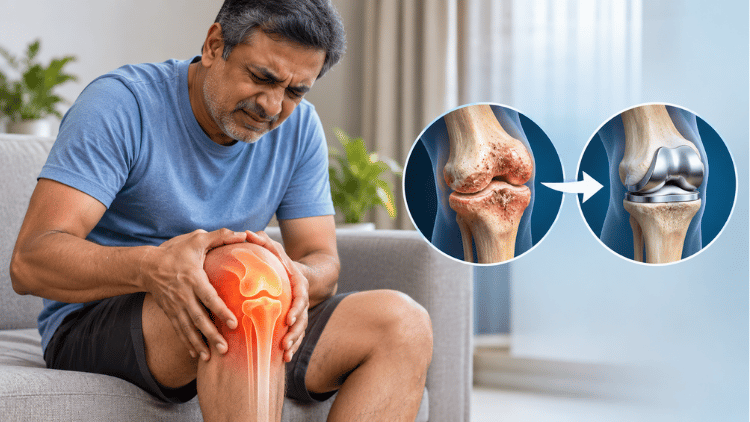
Knee pain after 40 is something many people first notice on the stairs, during a morning walk or while getting up from a chair. At first it feels like a little stiffness that settles on its own. For many people it slowly becomes a daily problem that affects work, sleep and independence. The good news is that most knee problems can be managed well when they are found early, and knee replacement is needed only for a smaller group of patients whose joints are badly worn. This guide explains why knee pain becomes common after 40, what the usual causes are, which treatments help, and how to know when knee replacement may be the right decision.
Why Does Knee Pain Increase After 40?
The knee is the largest joint in the body and carries your full body weight with every step. Over the years, the smooth cartilage that cushions the bones slowly thins. After 40, the body also repairs tissue more slowly, the muscles around the knee can weaken, and extra weight or long hours of sitting add more strain. Women may notice more joint problems after menopause, and people with physically demanding jobs or old sports injuries often feel symptoms earlier. None of this means pain is something you simply have to accept. Pain is a signal, and finding its cause is the first step towards relief.
Common Causes of Knee Pain After 40
Osteoarthritis
This is the most common cause. The cartilage wears down, the bones rub more closely, and the joint becomes stiff and painful, especially after rest and at the start of a walk.
Meniscus Tear
The meniscus is a cushion of cartilage inside the knee. It can tear with a sudden twist, or slowly weaken with age. A tear can cause catching, locking and pain on the inner or outer side of the knee.
Ligament Injury
A twist or fall can strain or tear the ligaments that keep the knee stable. The knee may swell quickly and feel as if it will give way.
Bursitis and Tendinitis
Inflammation of the small fluid sacs or tendons around the knee causes pain and tenderness, often after kneeling, climbing or repeated activity.
Patellofemoral Pain
Pain at the front of the knee, around the kneecap, which gets worse on stairs, squatting and sitting for long periods.
Gout and Rheumatoid Arthritis
Sudden severe pain, redness and swelling can point to gout. Rheumatoid arthritis often affects both knees, with morning stiffness that lasts a long time. These conditions need blood tests and a different treatment plan from wear-and-tear arthritis.
Symptoms You Should Not Ignore
Some pain after a long day is common, but certain signs show that the knee needs a proper check. Watch for pain that continues for more than a few weeks, swelling or warmth in the joint, stiffness that lasts more than half an hour in the morning, a grinding or clicking feeling, trouble climbing stairs, and a knee that feels weak or unstable. Pain that wakes you at night or does not improve with rest also deserves attention.
When Knee Pain Is an Emergency
See a doctor urgently if you cannot put weight on the leg after a fall, the knee looks deformed, swelling appears suddenly with fever, the skin turns red and hot, or the leg becomes numb or pale. These signs can mean a fracture, infection or a problem with blood flow, and waiting can make the damage worse.
How Doctors Find the Cause
The doctor first asks about your pain, your daily activity and any past injury, then examines how the knee moves, bends and bears weight. An X-ray is usually the first test and shows the joint space and bone changes. An MRI may be advised when a meniscus or ligament injury is suspected. Your doctor may also ask for blood tests to rule out gout, infection or rheumatoid arthritis. At Kshetrapal Hospital, scans are available through the Department of Radiology and blood tests through the pathology lab in Ajmer, so the whole check can be done in one place.
Treatment Without Surgery
Most people with knee pain do not need surgery, especially in the early stages. A good plan usually combines several steps.
Weight control matters more than most people expect, because every extra kilo adds several kilos of load across the knee during walking. Gentle, regular exercise such as walking on flat ground, cycling or swimming keeps the joint moving without heavy impact. Strengthening the thigh muscles protects the knee, and this is where physiotherapy in Ajmer can help with exercises designed for your exact problem. Pain-relief medicines, hot or cold packs, and a knee support may be advised for short periods. In some cases the doctor may suggest an injection into the joint to reduce pain and inflammation. Always take medicines only as prescribed, because long unsupervised use of painkillers can harm the stomach and kidneys.
Surgical Options for Knee Problems
When treatment without surgery is not enough, the orthopaedic doctor may discuss other options. Arthroscopy uses small cuts and a tiny camera to repair certain meniscus or ligament problems. Osteotomy reshapes the bone in selected younger patients to shift weight away from the damaged part of the joint. Partial knee replacement replaces only the worn section when the damage is limited to one side. Total knee replacement replaces the damaged surfaces of the whole joint with artificial parts. The right option depends on your age, the type of damage, your activity level and your general health.
When Is Knee Replacement Needed?
Knee replacement is usually considered when the joint is severely damaged and daily life is badly affected. Your doctor may suggest it if pain is severe even at rest or at night, you can walk only short distances, stairs and getting up from a chair have become very difficult, and X-rays show advanced damage. It is also considered when months of other treatments, such as exercise, medicines and injections, have not given enough relief. The decision is never based on the X-ray alone. Your pain, your goals and your overall health are discussed together. If you are not sure whether you need surgery, a second opinion from an orthopaedic specialist is always reasonable.
Recovery After Knee Replacement
Recovery depends on the person, but physiotherapy is a key part of every recovery plan. Patients are usually encouraged to start moving early, with support, because this helps prevent stiffness and blood clots. Exercises to bend and straighten the knee and to strengthen the muscles continue for several weeks. Following the exercise plan and the doctor’s advice on wound care, medicines and follow-up visits makes a big difference to the final result. Most patients notice that pain from the worn joint improves and that walking becomes easier as they recover.
How to Protect Your Knees
You can lower the chance of knee problems with simple habits. Keep your weight in a healthy range, stay active every day, and warm up before exercise. Wear shoes with good support and avoid long hours of sitting on the floor if it hurts. Build leg strength with simple exercises, and treat injuries early instead of waiting for them to settle. If you have diabetes or high blood pressure, keeping them under control also helps your joints and your general health. A regular health check-up is a good way to catch problems such as vitamin deficiencies, uric acid changes and diabetes early. You can read more about how physiotherapy supports joint and back problems in our guide on back pain relief without surgery.
Frequently Asked Questions
Is knee pain after 40 normal?
It is common, but it should not be ignored. Persistent pain has a cause that can usually be treated.
Can knee pain go away without treatment?
Mild pain from a minor strain may settle with rest. Pain that returns, worsens or lasts more than a few weeks needs a medical check.
Is walking good or bad for knee pain?
Gentle walking on flat ground is usually helpful because it keeps the joint moving. Stop and see a doctor if walking causes sharp pain or swelling.
Does everyone with arthritis need a knee replacement?
No. Many people manage well for years with exercise, weight control, physiotherapy and medicines. Replacement is for advanced damage that affects daily life.
Get Your Knee Pain Checked in Ajmer
If knee pain is stopping you from doing the things you enjoy, do not wait for it to become severe. Our Department of Orthopaedics can examine your knee, advise the right tests and explain your treatment options in simple terms. You can contact Kshetrapal Hospital or call 0145-2970501 to book an appointment. Our address is Sector-C, Panchsheel Nagar, Ajmer, Rajasthan.
This article is for general information only and does not replace advice from a qualified doctor.