

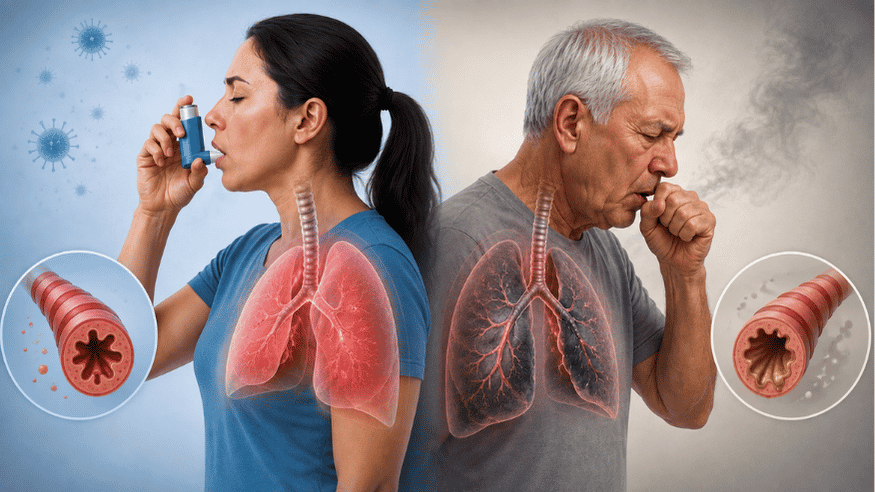
Asthma and COPD are both conditions that make breathing difficult. Asthma is usually triggered by specific allergens or irritants and often starts in childhood. COPD develops gradually, mainly in adults with a history of smoking or long-term exposure to lung irritants. Both conditions cause airway inflammation, but their causes, patterns, and long-term outlook are quite different.
Because asthma and COPD share several symptoms, such as wheezing, coughing, and shortness of breath, they are often confused with one another. Getting the right diagnosis matters, since the treatment approach for each condition is different.
What Is Asthma?
Asthma is a chronic condition in which the airways become inflamed and narrow in response to certain triggers, making it harder to breathe. It often begins in childhood, though it can also develop in adulthood, and symptoms tend to come and go rather than being constant.
Key features of asthma include:
- Episodes of wheezing, coughing, chest tightness, and shortness of breath
- Symptoms that are often triggered by specific factors, such as allergens, cold air, exercise, or respiratory infections
- Symptoms that can vary in intensity, sometimes disappearing completely between flare-ups
- A tendency to run in families, especially in people with a history of allergies
What Is COPD?
COPD, or Chronic Obstructive Pulmonary Disease, is a progressive lung condition that causes long-term airflow blockage and breathing difficulty. It typically develops gradually over many years and is most commonly linked to smoking, though other forms of long-term lung irritant exposure can also cause it.
Key features of COPD include:
- Persistent breathlessness, especially during physical activity, that gradually worsens over time
- A chronic cough that often produces mucus, sometimes referred to as smoker’s cough
- Symptoms that are generally constant rather than coming and going like asthma
- A strong link to smoking history or long-term exposure to air pollution, dust, or chemical fumes
- Typically diagnosed in adults over the age of 40
Key Differences Between Asthma and COPD
Age of onset
- Asthma: Often begins in childhood
- COPD: Usually develops in adults over 40
Main cause
- Asthma: Allergens, irritants, genetic factors
- COPD: Long-term smoking or lung irritant exposure
Symptom pattern
- Asthma: Comes and goes, often triggered by specific factors
- COPD: Persistent and gradually worsens over time
Reversibility of airflow blockage
- Asthma: Often reversible with treatment
- COPD: Usually only partially reversible
Response to treatment
- Asthma: Generally responds well to inhaled medications between flare-ups
- COPD: Requires ongoing management, as damage is often permanent
Family history
- Asthma: Commonly linked to family history of allergies or asthma
- COPD: Less linked to family history, more linked to lifestyle and environmental exposure
Can You Have Both Asthma and COPD?
Yes, it is possible to have both conditions at the same time, particularly in adults who had asthma earlier in life and later developed COPD due to smoking or long-term lung irritant exposure. This combination is sometimes referred to as Asthma-COPD Overlap. When both conditions are present, symptoms can be more severe, and treatment often needs to address both the allergic and progressive components of the disease.
What Causes Asthma and COPD Symptoms to Flare Up?
Understanding common triggers can help manage both conditions more effectively:
- Respiratory infections, such as colds or flu, which can worsen symptoms in both conditions
- Air pollution and smoke, including secondhand smoke and outdoor pollution
- Cold air or sudden weather changes, which can trigger airway narrowing
- Allergens, such as dust, pollen, and pet dander, particularly for asthma
- Physical exertion, especially in poorly controlled asthma
- Strong smells or chemical fumes, which can irritate sensitive airways
How Are Asthma and COPD Diagnosed?
Diagnosis usually involves a combination of medical history, physical examination, and specific breathing tests:
- Spirometry, a breathing test that measures how much air you can exhale and how quickly, helping distinguish between asthma and COPD
- Peak flow measurement, which tracks how well air moves out of your lungs and can help monitor asthma control
- Chest X-ray or CT scan, which can help rule out other lung conditions and assess lung damage in COPD
- Allergy testing, which may be recommended if asthma triggers are unclear
A detailed smoking history and pattern of symptoms often provide important clues that help doctors tell the two conditions apart.
Treatment Approaches for Asthma and COPD
While both conditions involve airway inflammation, treatment approaches differ based on the underlying nature of the disease:
For Asthma:
- Inhaled corticosteroids to reduce airway inflammation
- Quick-relief inhalers to manage sudden symptoms
- Identifying and avoiding personal triggers
- Long-term controller medications for moderate to severe cases
For COPD:
- Bronchodilator inhalers to help open the airways
- Pulmonary rehabilitation programs to improve lung function and stamina
- Oxygen therapy in advanced cases
- Quitting smoking, which is the single most important step in slowing disease progression
Both conditions benefit significantly from working closely with a pulmonologist to create a personalized management plan, since the right combination of medication and lifestyle changes can make a meaningful difference in daily breathing comfort.
When Should You See a Doctor?
You should consult a pulmonologist if you experience:
- Frequent or worsening shortness of breath
- A persistent cough lasting more than a few weeks
- Wheezing that occurs regularly or interferes with daily activities
- Breathing difficulty that worsens with physical activity
- A history of smoking along with ongoing respiratory symptoms
- Asthma symptoms that are not well controlled with current treatment
Early diagnosis and treatment can significantly slow disease progression in COPD and improve day-to-day symptom control in asthma.
If you are experiencing ongoing breathing difficulty or have concerns about asthma or COPD, the Department of Pulmonology at Kshetrapal Hospital in Ajmer offers complete lung function testing, diagnosis, and personalized treatment plans to help you breathe easier.
Frequently Asked Questions
Can asthma turn into COPD over time?
Asthma itself does not turn into COPD, but a person with asthma who smokes or is exposed to long-term lung irritants can develop COPD in addition to their asthma, resulting in overlapping symptoms.
Is COPD only caused by smoking?
Smoking is the leading cause of COPD, but long-term exposure to air pollution, occupational dust, and chemical fumes can also contribute to its development, even in non-smokers.
Can COPD be cured?
COPD cannot be cured, but its progression can be slowed and symptoms managed effectively with the right treatment, especially when combined with quitting smoking.
Why does asthma sometimes improve or disappear with age?
Some people, particularly those who developed asthma in childhood, experience fewer or milder symptoms as they get older, though the underlying airway sensitivity often remains and can flare up again under certain conditions.
Is a chronic cough always a sign of COPD?
Not necessarily, but a persistent cough lasting several weeks, especially with a history of smoking, should be evaluated by a doctor to rule out COPD or other lung conditions.