

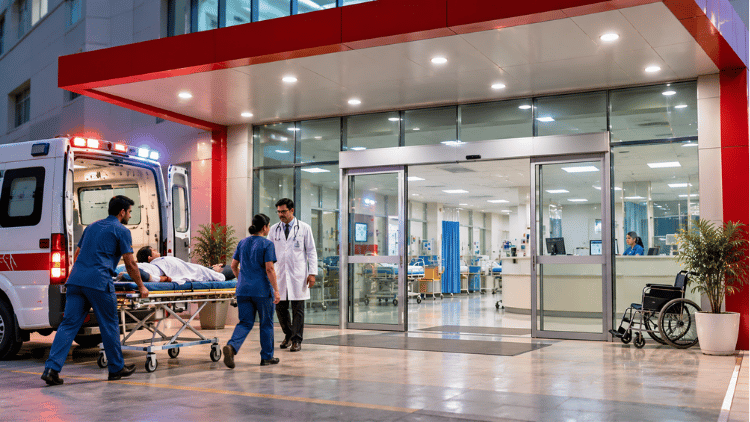
When someone in the family suddenly becomes seriously unwell, the first few minutes are confusing. Should we wait until morning? Should we go to a clinic or straight to a hospital? Which hospital is open at night? Knowing the answers before an emergency happens can save precious time. This guide explains which symptoms need emergency care, what you can do before reaching a 24-hour emergency hospital in Ajmer, what to carry with you, and what happens once you arrive.
What Counts as a Medical Emergency?
A medical emergency is any sudden illness or injury that could threaten life, cause lasting damage or get worse quickly without treatment. If you are asking yourself whether a symptom is serious enough, it is safer to treat it as an emergency and seek help. An emergency department is built to assess and treat such conditions at any hour, with doctors, nurses and diagnostic support ready at the same time. A regular OPD, on the other hand, is meant for planned or non-urgent consultations.
Warning Signs That Need the Emergency Room
Chest Pain or Pressure
Pain, pressure or tightness in the chest, especially if it spreads to the arm, jaw or back, or comes with sweating, breathlessness or nausea, can mean a heart attack. Do not wait to see if it passes. Read more in our guide on heart attack symptoms and emergency care.
Signs of Stroke
Sudden weakness or drooping of the face, weakness in an arm or leg, slurred speech, confusion or loss of vision can mean a stroke. Treatment works best when it starts early, so go at once.
Severe Breathing Difficulty
Struggling to breathe, blue lips, or breathlessness at rest, whether from asthma, a lung problem or a heart problem, needs urgent care. If you have known lung problems, our article on asthma vs COPD explains the difference between the two conditions.
Serious Injury or Accident
Road accidents, heavy bleeding, deep wounds, suspected broken bones, a head injury with vomiting or drowsiness, and burns all need emergency care.
Seizures and Unconsciousness
A first-time seizure, a seizure that lasts more than a few minutes, or a person who cannot be woken needs immediate attention.
Severe Abdominal Pain
Sudden, severe pain in the stomach, especially with vomiting, a hard abdomen, black stools or vomiting blood, should be checked right away.
Emergencies in Children
Take a child to the emergency room if they have difficulty breathing, a fever with very low activity or a stiff neck, repeated vomiting with dehydration, a seizure, or if an infant under three months has a fever.
Pregnancy-Related Emergencies
Heavy vaginal bleeding, severe abdominal pain, a sudden drop in baby movements, high blood pressure with headache and blurred vision, or fainting during pregnancy need urgent care. Severe one-sided pain with bleeding in early pregnancy can be a sign of an ectopic pregnancy.
Diabetic Emergencies
Confusion, shaking, heavy sweating or fainting in a person with diabetes may mean very low blood sugar. Extreme thirst, vomiting and drowsiness can mean very high sugar levels. Both need quick medical help.
Heat Stroke and Poisoning
In the hot months, a high body temperature with confusion, dizziness or collapse is a medical emergency. So is any case of suspected poisoning, including accidental swallowing of medicines or chemicals by children.
Emergency Room or OPD: How to Decide
Choose the emergency room for sudden, severe or fast-worsening symptoms, any injury with heavy bleeding or deformity, and anything that makes you fear for a life. Choose the OPD for mild fever, cold, minor aches, routine follow-up and planned tests. During the monsoon season, many families wonder when a fever needs hospital care, and our guide on dengue warning signs and when to hospitalise is a useful reference. If you are not sure, call the hospital and describe the situation. It is always better to ask than to delay.
What to Do Before You Reach the Hospital
Stay as calm as you can and keep the patient lying down or in a comfortable position. Loosen tight clothing. For heavy bleeding, press firmly on the wound with a clean cloth. Do not give food or water to a person who is drowsy, having a seizure or may need surgery. Do not put anything in the mouth of a person having a seizure, and move hard objects away so they do not get hurt. If a spinal injury is possible after a fall or accident, avoid moving the person more than needed. Do not try home remedies or wait for the symptoms to pass.
Arrange for someone else to drive if possible, so you can focus on the patient. Call the emergency number on the way and tell the staff what is happening, so they can be ready when you arrive.
What to Carry to the Emergency Room
If it does not delay you, take a few important items. Carry an identity proof, the patient’s previous prescriptions and reports, a list of regular medicines, and any information about allergies. If you have a health scheme or insurance card, keep it handy. Our hospital works with several government schemes and insurance partners, and you can see the list on our Insurance and TPA page. Make sure a family member has a working phone and some cash for immediate needs.
What Happens When You Arrive
At the emergency desk, a nurse or doctor first checks how serious the condition is. This is called triage, and it means the most critical patients are seen first, even if they arrived later than others. Vital signs such as pulse, blood pressure, breathing and oxygen level are checked quickly. The doctor then examines the patient and may order blood tests, an ECG, an X-ray, a CT scan or an ultrasound. Based on the results, the patient may be treated and sent home with advice, observed for some hours, or admitted to a ward or the intensive care unit. Please remain patient and answer the staff’s questions clearly. The information you give helps them decide the right treatment fast.
Emergency Care at Kshetrapal Hospital
Kshetrapal Hospital in Panchsheel Nagar provides emergency services round the clock, every day of the year. Patients can be supported by the Department of Critical Care Medicine when they need intensive monitoring, along with diagnostic services such as radiology, the pathology lab and the blood centre. Cardiac concerns are handled with the help of our cardiology department. You can read more about the hospital’s facilities before you need them. Families from Ajmer, Kishangarh, Nasirabad, Beawar, Pushkar and nearby areas come to us for urgent care.
Be Prepared Before an Emergency Happens
A little planning can make a stressful situation easier. Save the hospital’s emergency number in every family member’s phone. Keep a folder with important reports and prescriptions in a place everyone knows. Know the fastest route from your home to the hospital, and learn the basic warning signs of a heart attack and stroke. If someone in your family has a long-term illness, such as heart disease, diabetes or epilepsy, discuss the emergency plan with them in advance. Regular health check-ups also help you find risks early, and you can explore our health check-up packages for the whole family.
Frequently Asked Questions
Is the emergency department open on holidays and at night?
Yes. Emergency services at Kshetrapal Hospital run 24 hours a day, throughout the year.
Do I need an appointment for the emergency room?
No. Emergency patients can come directly without an appointment.
Will the sickest patient be seen first?
Yes. Patients are seen according to how serious their condition is, not only the order of arrival.
Can I use my insurance or government scheme card in an emergency?
You can speak to the hospital staff at the time of admission about the schemes and insurance partners listed on our website, and they will guide you on the process.
Contact Us in an Emergency
For emergency help, call 0145-2970502. For general enquiries, call 0145-2970501. Kshetrapal Hospital is located at Sector-C, Panchsheel Nagar, Ajmer, Rajasthan. You can also visit our contact page for directions. When in doubt, do not delay. It is always better to be seen and found fine than to wait and regret it.
This article is for general information only and does not replace advice from a qualified doctor.