

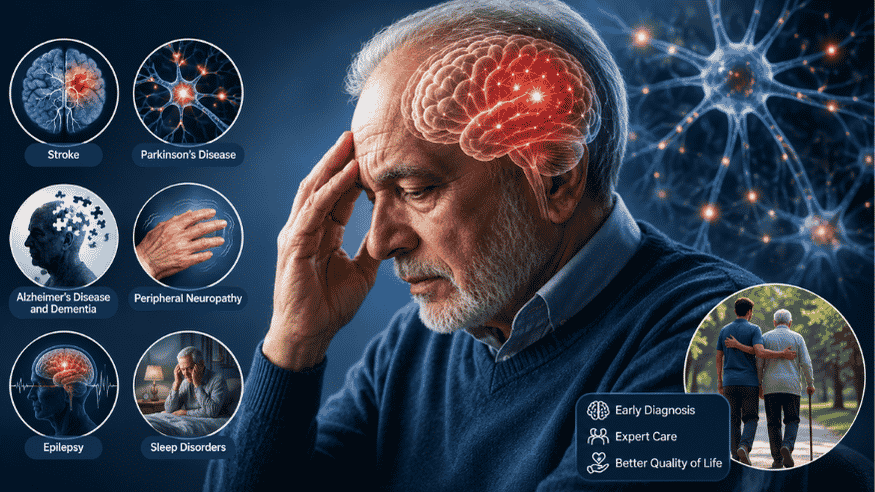
As people grow older, the body goes through several physical and mental changes. Along with joint pain, weakness, and reduced immunity, aging can also affect the brain, nerves, and overall nervous system. Many seniors experience memory issues, movement problems, balance difficulties, or nerve-related symptoms that may indicate underlying neurological conditions.
Understanding Neurological Disorders in Older Adults is important because early diagnosis and proper treatment can help improve quality of life, daily functioning, and long-term health management. While some neurological changes may occur naturally with age, persistent symptoms should never be ignored.
What Are Neurological Disorders?
Neurological disorders affect the brain, spinal cord, nerves, and muscles. These conditions can interfere with movement, memory, speech, coordination, sensation, and mental function.
Many neurological conditions become more common with aging because blood circulation, nerve function, and brain activity naturally change over time. Certain health conditions like diabetes, high blood pressure, obesity, and heart disease may also increase the risk of neurological problems in seniors.
Early medical attention and proper neurological care can help manage symptoms more effectively and reduce complications.
Dementia and Memory Disorders
One of the most common Neurological Disorders in Older Adults is dementia. This condition affects memory, thinking ability, communication, and daily activities.
People with dementia may experience:
- Frequent forgetfulness
- Confusion
- Difficulty recognizing people
- Mood changes
- Trouble speaking or understanding conversations
Memory-related disorders often develop slowly, which is why families may ignore the symptoms during the beginning stages. Early diagnosis can help identify the condition and improve long-term care planning.
Stroke and Brain Circulation Problems
Stroke occurs when blood supply to the brain is interrupted. It is considered a medical emergency and commonly affects older adults.
Common symptoms include:
- Sudden weakness on one side
- Difficulty speaking
- Facial drooping
- Loss of balance
- Sudden confusion
- Vision problems
Conditions like high blood pressure, diabetes, smoking, and poor heart health increase stroke risk in elderly individuals. Immediate treatment is extremely important because delayed medical care can lead to permanent brain damage.
Parkinson’s Disease
Parkinson’s disease affects movement and muscle control. It develops gradually and is commonly seen in older adults.
Symptoms may include:
- Hand tremors
- Slow movement
- Muscle stiffness
- Balance problems
- Difficulty walking
Many people initially ignore these symptoms thinking they are part of normal aging. However, proper neurological evaluation helps manage the condition better and supports mobility improvement.
Along with medical treatment, many patients also benefit from physiotherapy support for movement and balance management.
Peripheral Neuropathy
Peripheral neuropathy occurs when nerves outside the brain and spinal cord become damaged. It is commonly associated with diabetes, vitamin deficiencies, infections, or long-term medical conditions.
Symptoms may include:
- Burning sensation
- Tingling in hands or feet
- Numbness
- Weakness
- Difficulty walking
Nerve-related disorders can significantly affect daily life if left untreated. Patients with diabetes and long-term health conditions should avoid ignoring nerve symptoms and seek timely medical evaluation.
Alzheimer’s Disease
Alzheimer’s disease is a progressive brain disorder that mainly affects memory and thinking ability. It is one of the leading causes of memory disorders in elderly individuals.
Early symptoms may include:
- Forgetting recent events
- Repeating questions
- Misplacing items
- Difficulty making decisions
- Trouble performing routine tasks
As the condition progresses, patients may require assistance with daily activities and long-term care support. Early diagnosis and regular monitoring can help families plan better treatment and care management.
Epilepsy in Older Adults
Seizures and epilepsy can also occur in elderly individuals due to stroke, brain injury, tumors, infections, or neurological degeneration.
Symptoms may include:
- Sudden confusion
- Uncontrolled body movements
- Loss of awareness
- Staring episodes
- Temporary memory loss
Proper neurological evaluation is important because seizures in older adults may sometimes be linked to serious underlying conditions.
Sleep Disorders and Neurological Health
Many seniors experience sleep-related problems such as insomnia, disturbed sleep, excessive daytime sleepiness, or restless leg syndrome. Poor sleep can negatively affect memory, concentration, and mental health.
Long-term sleep disturbances may also increase the risk of neurological decline and cognitive problems. Maintaining healthy sleep habits and seeking medical support when symptoms continue is important for aging and brain health.
Warning Signs That Should Not Be Ignored
Older adults should consult a doctor if they experience:
- Sudden memory loss
- Difficulty speaking
- Frequent dizziness
- Weakness or numbness
- Loss of balance
- Tremors
- Persistent headaches
- Confusion or behavioral changes
Ignoring neurological symptoms for a long time may increase complications and delay treatment.
Patients can consult experienced specialist doctors through the Neurology Department for proper diagnosis and treatment planning.
Importance of Early Diagnosis
Early diagnosis plays an important role in managing neurological conditions effectively. Many neurological disorders progress slowly, and treatment becomes more difficult when symptoms are ignored for a long time.
Regular monitoring, proper medication, healthy lifestyle habits, and timely medical consultation can help improve quality of life and reduce complications.
Older adults with diabetes, high blood pressure, heart disease, or previous stroke history should especially consider regular neurological evaluation and preventive health check-ups for better long-term health management.
Treatment and Support for Neurological Disorders
Treatment depends on the type and severity of the condition. Management may include:
- Medications
- Lifestyle modifications
- Physiotherapy
- Rehabilitation support
- Brain imaging and diagnostic tests
- Long-term neurological monitoring
At Kshetrapal Hospital, patients can access advanced neurological care, experienced specialist doctors, diagnostic facilities, and specialized healthcare departments for complete treatment support.
Conclusion
Understanding Neurological Disorders in Older Adults helps families recognize symptoms early and seek timely medical care. Conditions like dementia, stroke, Parkinson’s disease, Alzheimer’s disease, and nerve disorders can significantly affect quality of life if left untreated.
Early diagnosis, regular monitoring, healthy lifestyle habits, and proper neurological care can help older adults maintain better independence and overall well-being. Paying attention to symptoms and consulting experienced doctors at the right time can make a major difference in long-term health outcomes.